We don’t claim to be a legal firm, but we have 30+ years in the HR communications game. We help clients simplify their summary plan descriptions (SPDs) by reviewing them from a communications perspective.
SPDs are more effective for employees and plan participants when they’re understandable (hello, ERISA). We help clients create documents that employees can actually read and use as intended — to help them.
Read through our SPD White Paper for insights and tips. Or jump to this blog with a bit more analysis and research to make the case for simplifying SPDs.
Download Our White Paper
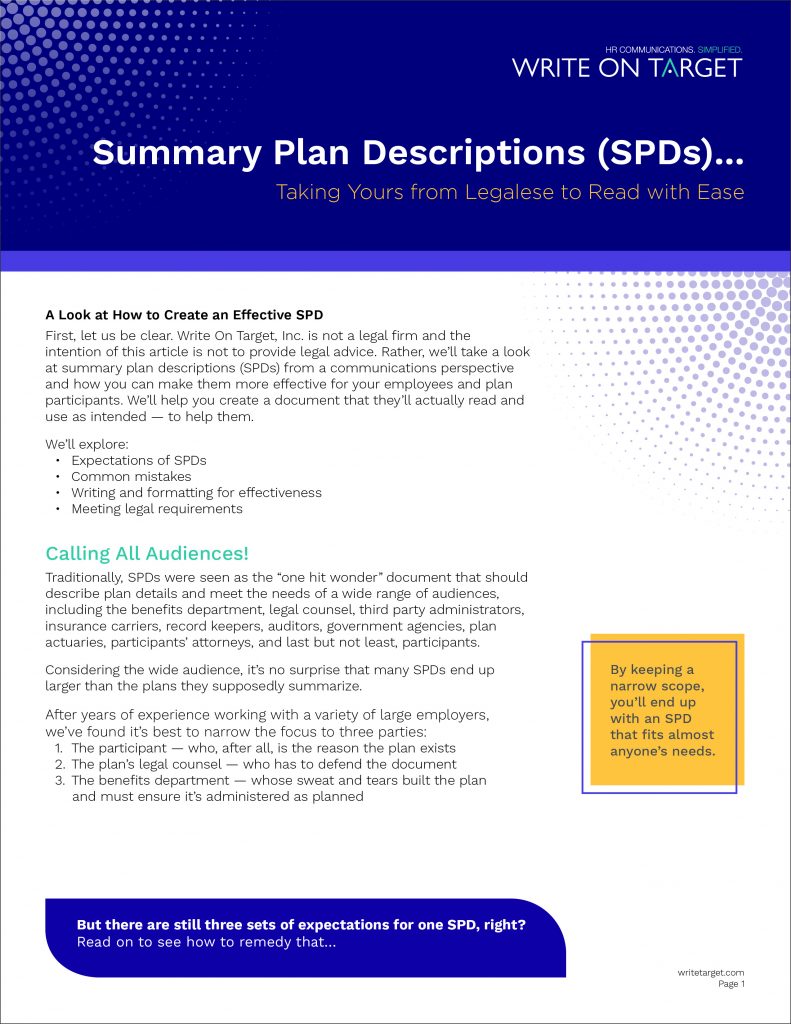
SPDs Can Be Technically Accurate and Understandable
More than half of Americans between the ages of 16 and 74 (i.e., working age) read at around the sixth-grade level. But to avoid legal liability, SPDs (and HR communications in general) are often written at literacy levels employees can’t understand. It’s not uncommon to see documents written at a level for juniors in college.
Risk-adverse writing alienates employees — and at a bad time, since they’re probably looking through an SPD because they need help. We say try more summary, less description.
Related Content
- There’s a high-level checklist to help you assess the readability and tone of your SPD — from the grade level of your writing to the kind of words you’re using.
- An article in the Case Western Reserve Law Review cited cases where disclosures presented so much information, SPDs were no longer considered helpful.
- SPDs are a big-ticket item in the HR compliance realm, but there are other employee reference documents that could probably use an overhaul.
- These three samples visually show how design and formatting can pair with simple language to create an SPD that’s easy on the eye.
- In general, HR communications tend to be on the cautious side, often with formal language (and too much of it). There’s a skill to writing HR comms that are technically correct yet easy to understand.